Age Criteria
There is no official age limit for the Canada Express Entry program. Applicants between 25 and 35 typically receive the highest CRS points for age. After 45, no age-related points are awarded.

The Canadian government uses Express Entry, an online system, to organise and process applications for skilled workers who want to immigrate to Canada and obtain Canadian permanent residence status. Introduced in 2015, this is the quickest and most popular path to obtain permanent residence for immigrants seeking a new life in Canada. We have a simple process to obtain Express Entry in Canada!
Three federal programs feed into the Express Entry pool.
Eligibility depends on your work experience, education
and language scores.
Three federal programs feed into the Express Entry pool. Eligibility depends on your work experience, education and language scores.
For professionals with foreign work experience. Requires 1+ year of skilled work, language proficiency (CLB 7), and post-secondary education.
For those already working in Canada on a work permit. Requires 1+ year of skilled Canadian work experience in the past 3 years.
For certified tradespeople. Requires 2 years of trade experience and a valid job offer or provincial certification.
IELTS, CELPIP, or TEF. Results valid for 2 years.
WES, ICAS, or IQAS evaluates your foreign degree.
Submit your profile to IRCC's pool. Profile valid for 12 months.
IRCC invites top-ranked candidates every 2 weeks.
Upload all documents within 60 days of ITA.
At a designated panel physician and Visa Application Centre.
Land in Canada and activate your permanent residency.
Step 1
There is no official age limit for the Canada Express Entry program. However, applicants between the ages of 25 and 35 typically receive the highest CRS (Comprehensive Ranking System) points for age. After the age of 45, no age-related points are awarded.
Step 2
To qualify for Express Entry, you must have completed at least one year of post-secondary education. Higher educational qualifications such as a two-year diploma, bachelor's degree, master's degree, or PhD can help you earn additional CRS points. If your education was completed outside Canada, you will need an Educational Credential Assessment (ECA).
Step 3
You must have at least one year of continuous full-time paid work experience (or an equivalent amount of part-time work) in a skilled occupation within the last 10 years. Foreign work experience is also accepted if it meets Express Entry requirements.
Step 4
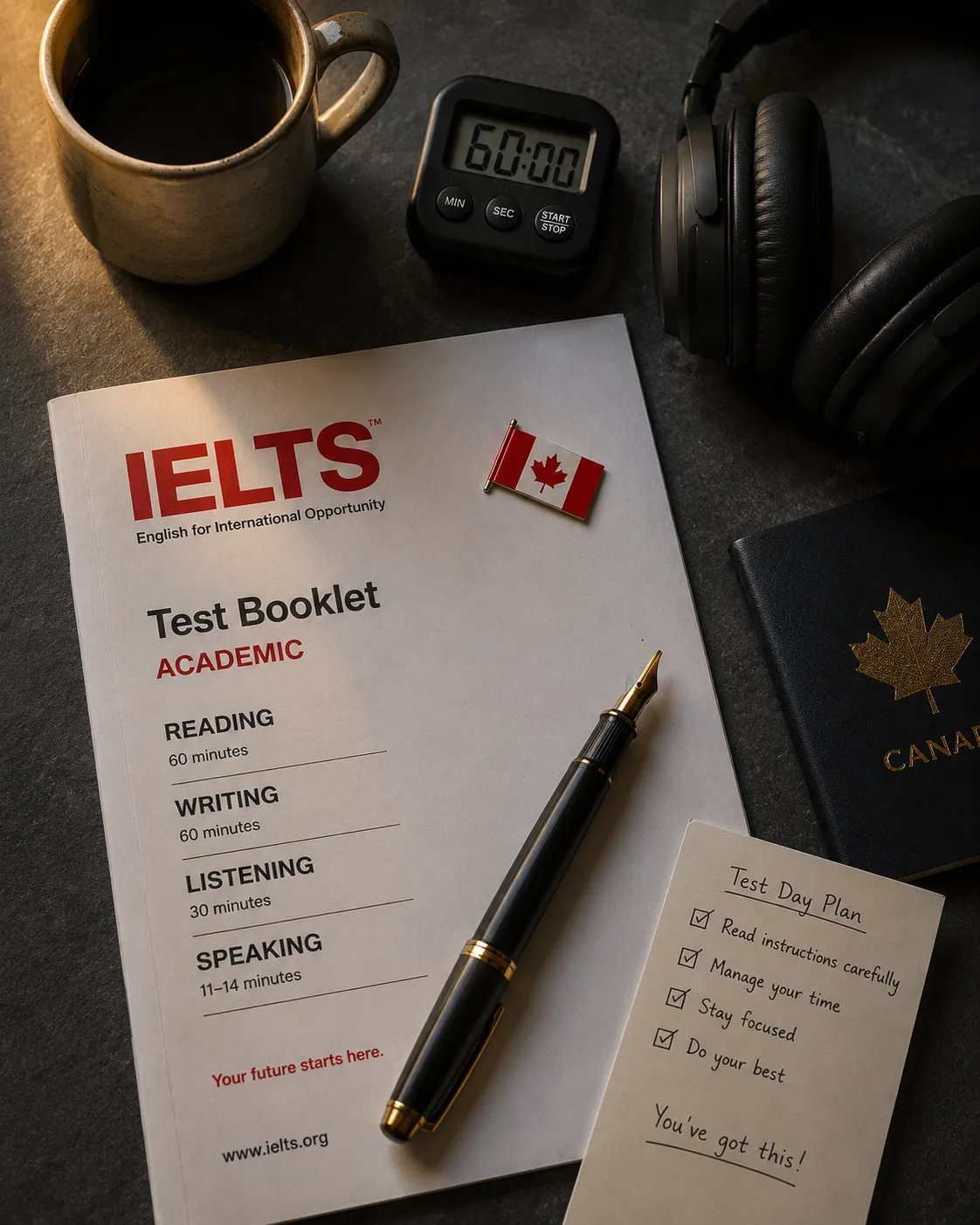
Applicants must prove their English or French language proficiency through an IRCC-approved language test such as IELTS, CELPIP, or TEF. You must achieve the minimum required score in all four language abilities: listening, reading, writing, and speaking.
Secure your consultation today to begin your personalized roadmap.
Simple steps to start your journey toward Canadian permanent residency. Before you create your Express Entry
profile, make sure you meet the eligibility criteria across age, education, work experience, and language ability.
There is no official age limit for the Canada Express Entry program. Applicants between 25 and 35 typically receive the highest CRS points for age. After 45, no age-related points are awarded.

You must have completed at least one year of post-secondary education. Higher qualifications earn additional CRS points. Foreign education requires an Educational Credential Assessment (ECA).

At least one year of continuous full-time paid work (or equivalent part-time) in a skilled occupation within the last 10 years. Foreign work experience is also accepted.
Prove your English or French proficiency through an IRCC-approved test (IELTS, CELPIP, or TEF). Minimum score required across listening, reading, writing, and speaking.
Immigration frameworks are in a state of constant flux. What was standard last year
is often obsolete today. We provide the technical oversight and regulatory intelligence
required to navigate these shifts with absolute certainty.
Immigration frameworks are in a state of constant flux. What was standard last year is often obsolete today. We provide the technical oversight and regulatory intelligence required to navigate these shifts with absolute certainty.